Monday, October 29, 2007

Journal of Religion, Conflict and Peace

Contents

From the Editor

THE GENESIS OF JOURNAL OF RELIGION, CONFLICT, AND PEACE by Joseph Liechty

Essay

RELIGION AND THE GLOBAL WAR ON TERRORISM by Douglas M. Johnston

Articles

A KAIROS MOMENT IN THE HISTORY OF WAR by Daniel C. Maguire

War is state sponsored violence. It has been facilely justified by the misuse and misinterpretation of the “just war theory.” A proper understanding and application of that theory proves that the United States’ recent wars are immoral. This is a kairos moment in which increasingly war is being shown to be ineffective and anachronistic, and biblical wisdom on violence can be seen as newly and pointedly relevant to contemporary assessments of violent power and peacemaking.

FROM MONASTIC ETHICS TO MODERN SOCIETY by Charles Prebish

In 1964 Winston King asked the then critical question defining studies of Buddhist ethics: “What is the relation of ethics to the total structure of Buddhist doctrine and practice, particularly with regard to the definition of moral values ... and the nature of ultimate sanctions.” Nearly half a century later, this question retains its status for inquiries about Buddhist conduct. This paper examines the critical role of Vinaya, or monastic regulations for the renunciant tradition, in contrast to the code of conduct, known as śīla, for lay practitioners, and does so with respect to both the ancient Asian tradition and the modern Western tradition of Buddhists. It muses on the possibility of how these twin spires of Buddhist conduct can form the basis of a compassionate socially engaged Buddhism for today.

HOLY WAR: TOWARD A HOLISTIC UNDERSTANDING by Brian A. Victoria

To speak of “holy war” today is, at least in the West, to speak of Islam or Islamic fundamentalism. Yet, even a cursory glance at history reveals that at one time or another all of the world’s major religions have sacralized violence, at least under certain conditions. This article seeks to understand why, despite the great variety in doctrine and praxis, the world’s major religions have, and continue to, support warfare under such guises as “just war,” “jihad,” or “defense of the [Buddha] Dharma.” While recognizing the important role that doctrine, especially competing claims of exclusive truth, plays in religiously endorsed warfare, this article seeks to take a holistic look at the multiple causes of this phenomenon, including anthropological, sociological, economic, psychological and even evolutionary factors. A wide variety of historical examples from multiple faiths compliment the theoretical constructs, revealing that the elimination of holy war challenges believers to live up to the highest tenets of their respective faiths.

MEETING IN EXILE by Gerald W. Schlabach

The designation “Historic Peace Churches” emerged from the coalition of Mennonites, Friends or Quakers, and Brethren as they advocated for the rights of conscientious objectors in the pre-World War II years. Their shared conviction has been that Jesus’ life and teaching makes the rejection of violence normative for all Christians. Yet other churches believe themselves to be working for peace and sometimes call themselves peace churches too. Mennonites and Catholics exemplify different yet overlapping understandings of what it means to be a peace church. Schlabach argues that as Christians recover a fuller sense of what it means to be a global church, in a globalizing age, a growing sense of identity and identification with a people spread through many nations will make it harder and harder for Christians to kill. Encouraging Christians to recognize themselves as a transnational people that always lives in diaspora will thus do more to create a global peace church than resolving the longstanding impasse between Christian pacifist and just war positions.

RELIGIOUS AND CULTURAL DIMENSIONS OF PEACEBUILDING by Nathan C. Funk

Contemporary Islamic-Western tensions are challenging scholars and practitioners of conflict resolution to engage more proactively with cultural and religious dimensions of peacebuilding. To be effective, however, responses to politicized religion need to recognize the complex and dynamic nature of contemporary identity conflicts, which are driven by a broad array of factors and not by religious ideas alone. Fundamentalism and religiously justified violence need to be understood as outcomes that have been reinforced by protracted confrontation and rivalry between identity groups, and not as autonomous phenomena abstracted from historical, cultural, political, or economic contexts. When informed by such an analysis, religious and cultural peacebuilding becomes a process through which the identity dynamics of conflict are transformed through dialogical engagement, activation of religious peace resources, and integration of religiously informed rationales for peacemaking with other forms of peace and justice advocacy. The essay concludes with a brief survey of priorities for Islamic-Western peacemaking and a call for heightened Canadian efforts to bridge cultural and religious divides.

SACRIFICING THE SACRIFICES OF WAR by Stanley Hauerwas

Hauerwas plays out William James’ call for a moral equivalent of war. He delves more deeply into the compelling nature of war in the search for a compelling nature of peace. In war we are compelled not by the sacrifice of life but by the sacrifice of our unwillingness to kill. What is the moral equivalent for peacemakers?

THE LETTER KILLETH by Hector Avalos

Reinterpretation of violent biblical texts fails both morally and practically in stemming the use of sacred scriptures to justify violence, argues Hector Avalos. Accordingly, he outlines a case for decanonizing biblical texts, using an explicit theological principle that any portrayal of a loving God as endorsing or committing violence must be understood as false. Although the author is a secular humanist, he demonstrates that a plea for decanonizing violent texts can be made within a Christian theological tradition. Avalos reviews historical examples of how Anabaptist and other Christian traditions have rethought the biblical canon, and he proposes that using nonviolence as a fundamental theological criterion for canonicity would yield a Bible more consistent with Christian pacifistic principles.

THE SIGNIFICANCE OF RELIGIONS FOR SOCIAL JUSTICE AND A CULTURE OF PEACE by Patricia M. Mische

One of the critical elements for a culture of peace is social justice. Perceptions of injustice lead to discontent, non-cooperation, conflict, civil unrest, and war. Religions have a powerful role in shaping ideas of social justice and legitimacy, and also in responding to perceptions of injustice and illegitimacy—e.g., passively accepting human suffering and injustice as the will of God and a badge of moral merit, or actively opposing them, and if so, whether by violent or nonviolent means. One reason that religions are often so powerful in war or peace is that they carry the archetypes, images, and symbols of meaning and identity that inform people’s thoughts and actions at deep, often unconscious levels. To maximize the potential of religions to contribute to peace and minimize those that breed war requires understanding these deep, unconscious levels of knowing and cultural formation; this is more elusive and difficult than addressing direct or even systemic forms of violence.

Book Reviews

FIGHTING WORDS: THE ORIGINS OF RELIGIOUS VIOLENCE by Hector Avalos

Joshua Thomas

IDENTITY AND VIOLENCE: THE ILLUSION OF DESTINY by Amartya Sen

David M. Craig

PEOPLE POWER: FIFTY PEACEMAKERS AND THEIR COMMUNITIES by Michael True

Jeffrey Epstein

RELIGION, VIOLENCE, MEMORY, AND PLACE by Oren Baruch Stier and J. Shawn Landres, eds

Susan Shepler

THE LESSONS OF NONVIOLENCE: THEORY AND PRACTICE IN A WORLD OF CONFLICT by Tom H. Hastings

Kenneth L. Brown

Volume 1, Issue 1

Fall 2007

Journal of Religion, Conflict, and Peace is a project of Plowshares, a peace studies collaborative of Earlham, Goshen, and Manchester Colleges. The journal is shaped by, but not confined to, the perspectives of the three historic peace churches—Society of Friends, Church of the Brethren, and the Mennonite Church—associated with the colleges that compose the collaborative. The journal addresses both the problem of religion and conflict and the possibility and practices of peace, giving particular attention to peace.

Tuesday, October 23, 2007

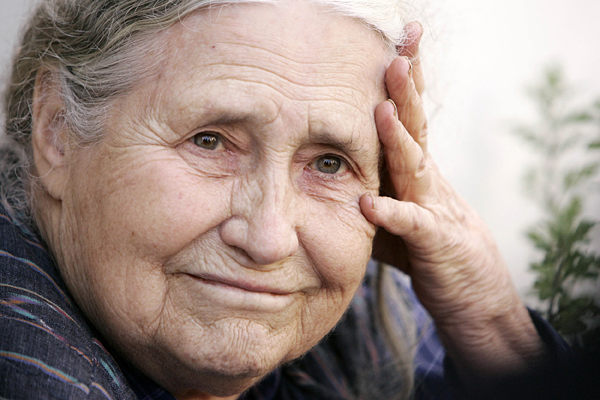
Doris Lessing


Martin Cleaver/Associated Press

Doris Lessing, the winner of the 2007 Nobel Prize in literature, described by Irving Howe as “the archaeologist of human relations,” and by the Swedish Academy as an “epicist of the female experience, who with skepticism, fire and visionary power has subjected a divided civilization to scrutiny,” was 88 when she won the award.

Born: 22 October 1919
Birthplace: Kermanshah, Iran

She is often called a feminist, although she denied being a feminism, and she wrote against communism, although she was once a communist.

Doris Lessing

Doris Lessing grew up in Zimbabwe (then Southern Rhodesia) and spoke out against its racist white minority government until she was finally exiled from the country, not to return until after it won its independence in 1980.


THURSDAY MAY 5, 1994 On The Commanding Self by Idries Shah (Re-printed from The London Times)


THE TIMES

Doris Lessing pays tribute to a great exponent of Sufism

Thirty years ago there appeared The Sufis, a book which at once announced itself as unlike any other. Hundreds of books by non-Sufis appear every year, disappear without trace or wash up on obscure shelves in academic libraries. This book was at once "recognised" -- a Sufi term which may be summed up by "like calls to like" -- by a remarkable range of people, many of them poets. The Sufis is a classic, and was by Idries Shah, who represents a genuine mystic tradition -- there are many imitators.

Since then he has written or compiled over 30 books, providing a comprehensive experience of the Sufi view of life. The whole body of work, together with his reissuing of still relevant Sufi classics, adds up to a many-faceted whole. There are people who have taken part in this process, book by book. Others have found this or that book useful or entertaining. The Commanding Self is both a summing up of a third of a century's work, and a development. People who have stayed the course will find similar ideas here, but put into a new context or taken a step further, sometimes unexpectedly.

"The commanding self" is a Sufi term for the false personality. Their contention is that we are all products of ideas put into us by our parents, by our culture, by the time we live in, and that what is real in us is very small (and precious). It is this part the Sufis aim to reach and teach. Some people, hearing that nearly everything they seem to be is only a mask made by conditioning, will say, "Well, of course!" -- and want more information, while others may feel threatened. The picture on the cover is a photograph of an ancient figurine, a representation of the commanding self, like a savage dog. "Do you want to live an angry biting life?" A very old philosophy or way of looking at life has been openly introduced into a culture -- the West -- that has had little contact with it. Which is not to say that Sufism has not been at work in every country, this one too, sometimes secretly. What the Sufis offer is seen by them as a kind of yeast, or energising stream. All our associations with the word mysticism are wrong or limited. For instance, the word "Sufism" is a recent German coinage, and not used by Sufis. "Isms" are foreign to the nature of something felt as a process or a development. Ignorance causes bafflement. Highly educated people, hearing the word "mysticism," may say they have no time for table- turning, seances, gurus, whirling dervishes, ESP, encounter groups and so on. A familiarity with the ancient ideas behind mysticism has not been part of our curriculum. People who have had 20 years of our kind of education may suddenly fall victim to a charlatan or a cult: they are highly developed in one area but left ignorant and defenceless in others. Sufis say it took 800 years of preparatory work to get Islam to accept them: they take a long-term view of the human condition. Then Islam claimed the Sufis as its property, and in our reference books Sufism is defined as a mystical Islamic sect. This philosophy, or Way, antedates Islam; claims to be the inner part or essence of every religion, is not interested in labels or definitions, and is continually reappearing, openly or in a disguised form, in every culture. A new Sufi appearance is always within the terms of the host culture, is never an exotic, thrives, does its work, and dies, leaving behind "husks." It is these dead forms that litter every culture and they are what most people see first. Shah has said often that a main difficulty in teaching is to prevent the material from being made into a system, yet another rigid framework of ideas, or a cult. This will happen in due course: it always does. Meanwhile here is the real thing, alive and full of juice and energy. People tempted to sample this pretty astonishing phenomenon could not do better than try this book. They will find the word mysticism has lost its bizarre associations, and that the Way of the Sufi (the title of one of Shah's books) reveals itself as a sophisticated view of life, embodied in people who through the centuries have always been in advance of their time. Sufis claim that all kinds of notions we think of as Western achievements were part of Sufi knowledge long ago: evolution, for instance, or the power locked in the atom. Their sociological and psychological insights are far in advance of our current ideas. These are most skilled and versatile servants. I have been a student for three decades, and am continually being surprised by what I learn. I have found nothing as informed, subtle, comprehensive, perceptive, anywhere else. Sufi uses of literature are certainly full of surprises. For thousands of years the teaching story has been a Sufi instrument. "Their effects on the innermost part of the human mind is direct and certain." Teaching stories are not didactic, not parables -- a form some of us at least are still familiar with. Parables are open to a simple interpretation: this tale means this or means that. Being introduced to the great treasurehouse of Sufi literature taught this writer, at least, a realistic view of her talents. There are wonderful tales here, some long, some very short. An elephant and a mouse fell in love. On the wedding night the elephant keeled over and died. The mouse said, "Oh Fate! I have unknowingly bartered one moment of pleasure and tons of imagination for a life time of digging a grave." There is not a grain of sentimentality in this view of life. A tortoise carries a stranded scorpion across a river. The scorpion stings the tortoise who demands indignantly: "My nature is to be helpful. I have helped you and now you sting me." "My friend," says the scorpion, "your nature is to be helpful. Mine is to sting. Why do you seek to transform your nature into a virtue and mine into villainy?"

----------------------------

In ''Walking in the Shade,'' published in 1997, she still refers to Sufism as ''the main current in my life, deeper than any other, my real preoccupation.''

----------------------------

Biography

Doris Lessing was born Doris May Taylor in Persia (now Iran) on October 22, 1919. Both of her parents were British: her father, who had been crippled in World War I, was a clerk in the Imperial Bank of Persia; her mother had been a nurse. In 1925, lured by the promise of getting rich through maize farming, the family moved to the British colony in Southern Rhodesia (now Zimbabwe). Doris's mother adapted to the rough life in the settlement, energetically trying to reproduce what was, in her view, a civilized, Edwardian life among savages; but her father did not, and the thousand-odd acres of bush he had bought failed to yield the promised wealth.

Lessing has described her childhood as an uneven mix of some pleasure and much pain. The natural world, which she explored with her brother, Harry, was one retreat from an otherwise miserable existence. Her mother, obsessed with raising a proper daughter, enforced a rigid system of rules and hygiene at home, then installed Doris in a convent school, where nuns terrified their charges with stories of hell and damnation. Lessing was later sent to an all-girls high school in the capital of Salisbury, from which she soon dropped out. She was thirteen; and it was the end of her formal education.

But like other women writers from southern African who did not graduate from high school (such as Olive Schreiner and Nadine Gordimer), Lessing made herself into a self-educated intellectual. She recently commented that unhappy childhoods seem to produce fiction writers. "Yes, I think that is true. Though it wasn't apparent to me then. Of course, I wasn't thinking in terms of being a writer then - I was just thinking about how to escape, all the time." The parcels of books ordered from London fed her imagination, laying out other worlds to escape into. Lessing's early reading included Dickens, Scott, Stevenson, Kipling; later she discovered D.H. Lawrence, Stendhal, Tolstoy, Dostoevsky. Bedtime stories also nurtured her youth: her mother told them to the children and Doris herself kept her younger brother awake, spinning out tales. Doris's early years were also spent absorbing her fathers bitter memories of World War I, taking them in as a kind of "poison." "We are all of us made by war," Lessing has written, "twisted and warped by war, but we seem to forget it."

In flight from her mother, Lessing left home when she was fifteen and took a job as a nursemaid. Her employer gave her books on politics and sociology to read, while his brother-in-law crept into her bed at night and gave her inept kisses. During that time she was, Lessing has written, "in a fever of erotic longing." Frustrated by her backward suitor, she indulged in elaborate romantic fantasies. She was also writing stories, and sold two to magazines in South Africa.

Lessing's life has been a challenge to her belief that people cannot resist the currents of their time, as she fought against the biological and cultural imperatives that fated her to sink without a murmur into marriage and motherhood. "There is a whole generation of women," she has said, speaking of her mother's era, "and it was as if their lives came to a stop when they had children. Most of them got pretty neurotic - because, I think, of the contrast between what they were taught at school they were capable of being and what actually happened to them." Lessing believes that she was freer than most people because she became a writer. For her, writing is a process of "setting at a distance," taking the "raw, the individual, the uncriticized, the unexamined, into the realm of the general."

In 1937 she moved to Salisbury, where she worked as a telephone operator for a year. At nineteen, she married Frank Wisdom, and had two children. A few years later, feeling trapped in a persona that she feared would destroy her, she left her family, remaining in Salisbury. Soon she was drawn to the like-minded members of the Left Book Club, a group of Communists "who read everything, and who did not think it remarkable to read." Gottfried Lessing was a central member of the group; shortly after she joined, they married and had a son.

During the postwar years, Lessing became increasingly disillusioned with the Communist movement, which she left altogether in 1954. By 1949, Lessing had moved to London with her young son. That year, she also published her first novel, The Grass Is Singing, and began her career as a professional writer.

Lessing's fiction is deeply autobiographical, much of it emerging out of her experiences in Africa. Drawing upon her childhood memories and her serious engagement with politics and social concerns, Lessing has written about the clash of cultures, the gross injustices of racial inequality, the struggle among opposing elements within an individuals own personality, and the conflict between the individual conscience and the collective good. Her stories and novellas set in Africa, published during the fifties and early sixties, decry the dispossession of black Africans by white colonials, and expose the sterility of the white culture in southern Africa. In 1956, in response to Lessing's courageous outspokenness, she was declared a prohibited alien in both Southern Rhodesia and South Africa.

Over the years, Lessing has attempted to accommodate what she admires in the novels of the nineteenth century - their "climate of ethical judgement" - to the demands of twentieth-century ideas about consciousness and time. After writing the Children of Violence series (1951-1959), a formally conventional bildungsroman (novel of education) about the growth in consciousness of her heroine, Martha Quest, Lessing broke new ground with The Golden Notebook (1962), a daring narrative experiment, in which the multiple selves of a contemporary woman are rendered in astonishing depth and detail. Anna Wulf, like Lessing herself, strives for ruthless honesty as she aims to free herself from the chaos, emotional numbness, and hypocrisy afflicting her generation.

Attacked for being "unfeminine" in her depiction of female anger and aggression, Lessing responded, "Apparently what many women were thinking, feeling, experiencing came as a great surprise." As at least one early critic noticed, Anna Wulf "tries to live with the freedom of a man" - a point Lessing seems to confirm: "These attitudes in male writers were taken for granted, accepted as sound philosophical bases, as quite normal, certainly not as woman-hating, aggressive, or neurotic."

In the 1970s and 1980s, Lessing began to explore more fully the quasi-mystical insight Anna Wulf seems to reach by the end of The Golden Notebook. Her "inner-space fiction" deals with cosmic fantasies (Briefing for a Descent into Hell, 1971), dreamscapes and other dimensions (Memoirs of a Survivor, 1974), and science fiction probings of higher planes of existence (Canopus in Argos: Archives, 1979-1983). These reflect Lessing's interest, since the 1960s, in Idries Shah, whose writings on Sufi mysticism stress the evolution of consciousness and the belief that individual liberation can come about only if people understand the link between their own fates and the fate of society.

Lessing's other novels include The Good Terrorist (1985) and The Fifth Child (1988); she also published two novels under the pseudonym Jane Somers (The Diary of a Good Neighbour, 1983 and If the Old Could..., 1984). In addition, she has written several nonfiction works, including books about cats, a love since childhood. Under My Skin: Volume One of My Autobiography, to 1949 appeared in 1995 and received the James Tait Black Prize for best biography.

Addenda (by Jan Hanford)

In June 1995 she received an Honorary Degree from Harvard University. Also in 1995, she visited South Africa to see her daughter and grandchildren, and to promote her autobiography. It was her first visit since being forcibly removed in 1956 for her political views. Ironically, she is welcomed now as a writer acclaimed for the very topics for which she was banished 40 years ago.

She collaborated with illustrator Charlie Adlard to create the unique and unusual graphic novel, Playing the Game. After being out of print in the U.S. for more than 30 years, Going Home and In Pursuit of the English were republished by HarperCollins in 1996. These two fascinating and important books give rare insight into Mrs. Lessing's personality, life and views.

In 1996, her first novel in 7 years, Love Again, was published by HarperCollins. She did not make any personal appearances to promote the book. In an interview, she describes the frustration she felt during a 14-week worldwide tour to promote her autobiography: "I told my publishers it would be far more useful for everyone if I stayed at home, writing another book. But they wouldn't listen. This time round I stamped my little foot and said I would not move from my house and would do only one interview." And the honors keep on coming: she was on the list of nominees for the Nobel Prize for Literature and Britain's Writer's Guild Award for Fiction in 1996.

Late in the year, HarperCollins published Play with A Tiger and Other Plays, a compilation of 3 of her plays: Play with a Tiger, The Singing Door and Each His Own Wilderness. In an unexplained move, HarperCollins only published this volume in the U.K. and it is not available in the U.S., to the disappointment of her North American readers.

In 1997 she collaborated with Philip Glass for the second time, providing the libretto for the opera "The Marriages Between Zones Three, Four and Five" which premiered in Heidelberg, Germany in May. Walking in the Shade, the anxiously awaited second volume of her autobiography, was published in October and was nominated for the 1997 National Book Critics Circle Award in the biography/autobiography category. This volume documents her arrival in England in 1949 and takes us up to the publication of The Golden Notebook. This is the final volume of her autobiography, she will not be writing a third volume.

Her new novel, titled "Mara and Dann", was been published in the U.S in January 1999 and in the U.K. in April 1999. In an interview in the London Daily Telegraph she said, "I adore writing it. I'll be so sad when it's finished. It's freed my mind." 1999 also saw her first experience on-line, with a chat at Barnes & Noble (transcript). In May 1999 she will be presented with the XI Annual International Catalunya Award, an award by the government of Catalunya.

December 31 1999: In the U.K.'s last Honours List before the new Millennium, Doris Lessing was appointed a Companion of Honour, an exclusive order for those who have done "conspicuous national service." She revealed she had turned down the offer of becoming a Dame of the British Empire because there is no British Empire. Being a Companion of Honour, she explained, means "you're not called anything - and it's not demanding. I like that". Being a Dame was "a bit pantomimey". The list was selected by the Labor Party government to honor people in all walks of life for their contributions to their professions and to charity. It was officially bestowed by Queen Elizabeth II.

In January, 2000 the National Portrait Gallery in London unveiled Leonard McComb's portrait of Doris Lessing.

Ben, in the World, the sequel to The Fifth Child was published in Spring 2000 (U.K.) and Summer 2000 (U.S.). Another new novel is planned for next year.

Bibliography

1948

  • The short story The Pig published in TREK 12, April 1948
  • The short story Flight published in TREK 12 , September 1948

1948

  • The Pig (short story) and Flight (short story), publshed in TREK, 12 (April 1948)

1949

  • The short story Under My Hand published in TREK 13 , February 1949
  • The short story Fruit From Ashes published in TREK13 , October 1949

1950

  • The Grass Is Singing
      London:
      Michael Joseph, 1950
      Penquin, 1961
      Heinemann Educ, 1973
      Grafton, 1980
      Paladin, 1989
      Penquin (Adaptation - retold by Andy Hopkins and Joc Potter), 1992
      Flamingo (HarperCollins), 1994
      New York:
      Crowell, 1950
      Bantam Books, 1952
      Ballantine Books, 1964
      Popular Library, 1970's.
      New American Library (A Plume Book), 1976
      Plume, 1995
      HarperPerennial (HarperCollins), 1999

  • The Nuissance (short story) published in Towards the Sun: A Miscellany of Southern Africa, edited by Roy Macnab. London: Collins.

1951

  • This Was the Old Chief's Country

1952

  • Martha Quest, the first volume of Children of Violence
      London:
      Michael Joseph, 1952
      MacGibbon & Kee, 1965 (in one volume with A Proper Marriage)
      Panther, 1969
      Hart-Davis/Granada, 1977
      HarperCollins, 1993
      New York:
      Simon & Schuster, 1964 (in one volume with A Proper Marriage)
      Signet, 1966
      Plume (Penquin), 1970
      Plume, 1993
      HarperPerennial (HarperCollins), 1995
      San Bernardino, CA:
      Borgo Press, 1995

1953

  • Five: Short Novels
      London:
      Michael Joseph, 1953
      Penguin, 1960
      Granada, 1969
      Panther, 1972
      Paladin, 1991

  • Before the Deluge (play) later called Mr. Dolinger (1958).

1954

  • A Proper Marriage, the second volume of Children of Violence
      London:
      Michael Joseph, 1954
      MacGibbon & Kee, 1965 (in one volume with Martha Quest)
      Granada, 1977
      Grafton, 1990
      HarperCollins, 1993
      New York:
      Simon & Schuster, 1964 (in one volume with Martha Quest)
      Plume (Penquin), 1970
      HarperPerennial (HarperCollins), 1995
      San Bernardino, CA:
      Borgo Press, 1995

  • Received Somerset Maugham Award of the Society of Authors for Five: Short Novels.
  • A Road to the Big City (short story), Pick of Today's Short Stories 5.

1955

  • A Mild Attack of Locusts (short story), published in the New Yorker, February 26, 1955.
  • Through The Tunnel (short story), published in the New Yorker, August 6, 1955.

1956

  • Retreat to Innocence
      London:
      Michael Joseph, 1956
      Sphere Books, 1967
      New York:
      Prometheus (Liberty Book Club), 1959

  • Myself As Spokesman (essay), New Yorker, 31, January 21, 1956 (also referred to as "Myself as Sportsman" in some sources)
  • Being Prohibited (essay), New Statesman and Nation, 51, April 2, 1956
  • Kariba Project (essay), New Statesman and Nation, 51, June 9, 1956
  • Plea for the Hated Dead Woman (poem), New Statesman and Nation, 51, June 30, 1956

1957

  • Going Home
      London:
      Michael Joseph, 1957
      Panther, 1968
      Flamingo (HarperCollins), 1992
      New York:
      Ballantine Books, 1968
      Popular Library, 1970's
      HarperPerennial (HarperCollins), 1996

  • The Habit of Loving
      London:
      MacGibbon & Kee, 1957
      Panther, 1966
      Flamingo (HarperCollins), 1993
      New York:
      Crowell, 1958
      Ballantine, 196?
      Popular Library, 196?

  • The Black Madonna (short story), published in Winter's Tales 3. London: Macmillan.

  • The Small Personal Voice (essay), in Declaration
      London:
      MacGibbon & Kee, 1957
      Reader's Union, 1959
      New York:
      E. P. Dutton & Co., 1958

  • Flavours of Exile (short story) published in The London Magazine - Vol. 4, No. 2., edited by John Lehmann; London: Chatto & Windus. 1957.
  • Tobacco Farm (article) with drawings by Paul Hogarth, published In "The Countryman, A Quarterly Non-Party Review and Miscellany of Rural Life and Work for the English-speaking World", Volume LIV, No. 2, Summer 1957.

1958

  • A Ripple from the Storm, the third volume of Children of Violence
      London:
      Michael Joseph, 1958
      MacGibbon & Kee, 1965
      Panther/Granada, 1966
      Hart-Davis, MacGibbon, 1977
      Paladin, 1990
      Flamingo (HarperCollins), 1993
      New York:
      Simon & Schuster, 1966 (in one volume with Landlocked)
      Plume (New American Library), 1970 (reprinted by Plume/Penquin)
      HarperPerennial (HarperCollins), 1995
      San Bernardino, CA:
      Borgo Press, 1995

  • Mr. Dolinger (play) (also know under the title Before the Deluge), was produced at the Oxford Playhouse, England. The play is unpublished.
  • Each His Own Wilderness (play) was performed by the English Stage Society at the Royal Court Theatre, London, on 23 March.
  • London Diary (essay), New Statesman, 55, March 15, 1958.
  • London Diary (essay), New Statesman, 55, March 22, 1958.
  • Desert Child (essay), New Statesman, 56, November 15, 1958.

1959

  • Each His Own Wilderness (play) published in New English Dramatists, Three Plays introduced and edited by E. Martin Browne. (Each His Own Wilderness, Doris Lessing; The Hamlet of Stepney Green, Bernard Kops; Chicken Soup with Barley, Arnold Wesker.)
      Harmondsworth:
      Penquin, 1959;
      London:
      Flamingo (HarperCollins), 1996 (Play with a Tiger and Other Plays)

  • Fourteen Poems

  • Crisis in Central Africa: The Fruits of Humbug (essay), Twentieth Century, 165, April 1959.

1960

  • In Pursuit of the English: A Documentary
      London:
      MacGibbon & Kee, 1960
      Sphere Books Limited, 1968
      Granada, 1977
      Panther/Granada, 1980
      Flamingo (HarperCollins), 1993
      New York:
      Simon & Schuster, 1961
      Ballantine Books, 1966
      Popular Library, 1970's
      HarperPerennial (HarperCollins), 1996

  • In Pursuit of the English (excerpt), Alienation. London: MacGibbon & Kee.
  • Through the Tunnel (short story), published in Great Stories From The World of Sport, editors Peter Schwed and Herbert Warren Wind. London: Heineman.
  • Ordinary People (essay), New Statesman, 59, June 25, 1960.
  • Our Friend Judith (short story), Partisan Review, 27, Summer 1960.

1961

  • The Truth About Billy Newton (play) was produced Salisbury, Wiltshire, England. The play is unpublished.
  • African Interiors (essay), New Statesman, 62, October 27, 1961.
  • Letter to the Editor, New Statesman, 62, November 3, 1961.
  • Smart Set Socialists (essay), New Statesman, 62, December 1, 1961.
  • Homage for Isaac Babel (short story), New Statesman, 62, December 15, 1961.

1962

  • The Golden Notebook
      London:
      Michael Joseph, 1962, 1972, 1986
      Penquin, 1964, 1972
      Panther/Granada, 1973
      Paladin/Grafton, 1989
      New York:
      Simon & Schuster, 1962, 1984
      McGraw-Hill, 1963
      Ballantine Books, 1968
      Bantam, 1973
      Caedmon (HarperCollins) (audio tape: excerpt from The Golden Notebook), 1986
      HarperPerennial (HarperCollins), 1994
      San Bernardino, CA:
      Borgo Press, 1994
      HarperPerennial (HarperCollins), 1999

  • Play with a Tiger produced at the Comedy Theatre, London.

  • From the Black Notebook (excerpt from The Golden Notebook), Partisan Review, 29, Spring 1962.
  • The New Man (short story), New Statesman, 64, September 7, 1962.
  • Interview in Authors Talking.
  • The Grass is Singing adapted as a television play.

1963

  • A Man and Two Women
      London:
      MacGibbon & Kee, 1963
      New York:
      Simon & Schuster, 1963
      Ballantine Books, 1965
      Popular Library
      Plume, 1976
      Touchstone (Simon & Schuster), 1984

  • One Off the Short List (short story), Kenyon Review, 25, Spring 1963.
  • A Letter from Home (short story), Partisan Review, 30, Summer 1963.
  • A Room (short story), New Statesman, 66, August 2, 1963.
  • My Father (essay), London Sunday Telegraph, September 1, 1963.
  • What Really Matters (essay), Twentieth Century, 172, Autumn 1963.
  • The New Man (short story), Voices.
  • Mrs. Fortescue (short story), Winter's Tales 9.

1964

  • African Stories
      London:
      Michael Joseph, 1964
      New York:
      Simon & Schuster, 1965
      Ballantine Books, 1966
      Popular Library, 1976
      Touchstone (Simon & Schuster), 1977, 1981

  • Play with a Tiger produced in New York.
  • An Unposted Love Letter (short story), published in Thy Neighbor's Wife, Twelve Original Variations on the Theme of Adultery, edited by James Turner; London: Cassell, 1964, Four Square, 1967; New York: Stein and Day, 1968
  • All Seething Underneath (essay: My Father) abridged, Vogue Magazine, February 15, 1964.
  • Zambia's Joyful Week (essay), New Statesman, 68, November 6, 1964.
  • Interview, Counterpoint.

1965

  • Landlocked, the fourth volume of Children of Violence
      London:
      MacGibbon & Kee, 1965
      Panther, 1967
      Panther, 1974
      Grafton, 1990
      HarperCollins, 1993
      New York:
      Simon & Schuster, 1966 (in one volume with A Ripple from the Storm)
      Plume (New American Library), 1970 (reprinted by Plume/Penquin)
      HarperPerennial (HarperCollins), 1995
      San Bernardino, CA:
      Borgo Press, 1995

  • Review of A. Hutchinson's Road to Ghana, African-English Literature.
  • Little Tembi (short story), published in Modern Choice I, editor Eva Figes. London: Blackie.

1966

  • Her translation of The Storm, a play by Alexander Ostrovsky, is produced by the National Theatre in London. Production of two original television plays, Please Do Not Disturb and Care and Protection. She collaborates on further television scripts based on works by Maupassant.

  • The Black Madonna
      London: Panther, 1966; Flamingo (HarperCollins)

  • Winter in July
      London: Panther, 1966; Flamingo (HarperCollins), 1993

  • Allah Be Praised (review of The Autobiography of Malcolm X), New Statesman, 71, May 27, 1966.
  • Here (poem), New Statesman, 71, June 17, 1966.
  • Visit (poem), New Statesman, 72, November 4, 1966.
  • Play with a Tiger, in Plays of the Sixties, vol. 1. London: Pan Books Ltd., 1966
  • Care and Protection (play)
  • Do Not Disturb (play)
  • The Storm (from A. Ostrovsky's play)
  • Between Men (play)
  • To Room Nineteen (short story), published in The World of Modern FIction: European, editor Stephen Marcus. New York: Simon and Schuster.

1967

  • Particularly Cats
      London:
      Michael Joseph, 1967
      Panther/Grafton 1979
      New York:
      Simon & Schuster, 1967
      Signet, 1971
      Simon & Schuster/Fireside, 1978

  • A fourth television play is adapted from the short story, Between Men.
  • BBC 2 broadcast of Play with a Tiger, producer: Michael Bakewell, director: Stuart Burge.
  • She publishes statement in Authors Take Sides on Vietnam.
  • Particularly Cats (excerpt), McCalls, 94, March 1967.
  • A Small Girl Throws Stones at a Swan in Regents Park (poem), New Statesman, 74, November 24, 1967.
  • Hunger the King (poem), New Statesman, 74, November 24, 1967.
  • Omar Khayyam (essay), New Statesman, 74, December 15, 1967.
  • Through the Tunnel (short story), published in Breadth of Danger: Fifty Tales of Peril and Fear by Masters of the Short Story, editor Eric Duthie. London: Odhams.

1968

  • Nine African Stories: With a Specially Written Introduction by The Author, Selected by Michael Marland; London: Longmans, (Selections from African stories)
  • Three Plays - Includes The Long and the Short and the Tall and Each His Own Wilderness; Willis Hall, Editor, Harmondsworth, Penguin, 1968, also includes Yes, and After by Michael Hastings
  • Side Benefits of an Honorable Profession (short story), Partisan Review, 35, Fall 1968.
  • Afterword in Oliver Schreiner's The Story of an African Farm, New York: Fawcett World Library.

1969

  • The Four-Gated City, the fifth volume of Children of Violence
      London:
      MacGibbon & Kee, 1969
      Granada, 1972
      Paladin, 1990
      HarperCollins, 1993
      New York:
      Knopf, 1969
      Bantam Books, 1970
      Plume (Penquin), 1976
      HarperPerennial (HarperCollins), 1995
      San Bernardino, CA:
      Borgo Press, 1995

  • Particularly Cats (excerpt), Cat Fancy, 12, March-April 1969.
  • Particularly Cats (excerpt), Cat Fancy, 12, June 1969.
  • A Few Doors Down (essay), New Statesman, 78, December 26, 1969.

1970 Interview in New American Review 8

1971

  • Briefing for a Descent into Hell
      London:
      Jonathan Cape, 1971
      Panther, 1972
      Flamingo (HarperCollins), 1995
      New York:
      Knopf, 1971
      Vintage Books (Random House), 1981


  • Briefing for a Descent into Hell shortlisted for The Booker Prize.
  • Ancient Ways to New Freedom (essay), Vogue, 158, September 15, 1971 and in The Diffusion of Sufi Ideas in the West, edited by L. Lewin; Boulder, Colorado: Keysign Press.
  • Report on the Threatened City (short story, Playboy, 17, November 1971.
  • Spies I Have Known (short story), Partisan Review, 38, Winter 1971.
  • A Deep Darkness (review of Isak Dinisen's Shadows on the Grass), New Statesman, January 15, 1971.
  • Ant's Eye View (essay on Eugene Marais's The Soul of the White Ant), New Statesman, January 29, 1971.
  • The Ant Heap (short story), published in Great British Short Novels, editor R.D. Spector. New York: Bantam.

1972

  • The Story of a Non-Marrying Man and Other Stories
      London:
      Jonathan Cape, 1972
      Penguin Books, 1975
      Grafton/Paladin, 1990
      New York (American title The Temptation of Jack Orkney and Other Stories):
      Knopf, 1972
      Bantam Books, 1974

  • What Looks Like an Egg and Is an Egg? (essay), New York Times Book Review, 77, May 7, 1972.
  • In the World, Not of It, published in Encounter, August, 1972.
  • An Old Woman and Her Cat (short story), published in New American Review 14, editor Theodore Solotaroff. New York: Simon and Schuster.
  • Ancient Way to New Freedom (essay), Diffusion of Sufi Ideas in the West.
  • Foreword, An Illfated People.
  • Preface in reissue of the Golden Notebook.
  • Postscript in Play with a Tiger.

1973

  • The Summer Before the Dark
      London:
      Jonathan Cape, 1973
      Paladin, 1990
      New York:
      Knopf, 1973
      Bantam, 1974
      Vintage Books (Random House), 1983

  • This Was the Old Chief's Country: Collected African Stories, Volume 1
  • The Sun Between Their Feet: Collected African Stories, Volume 2
      London:
      Michael Joseph, 1973
      Triad/Granada, 1979
      Paladin, 1992
      Flamingo (HarperCollins), 1993
      Flamingo (HarperCollins), 1994

  • The Singing Door, a one-act play written for a textbook anthology. Published in:
      Second Playbill, ed. Alan Durband, London: Hutchinson.
      and in Play with a Tiger and Other Plays, London: Flamingo (HarperCollins), 1996.

  • Letters in The Novels of Doris Lessing.
  • On The Golden Notebook (Preface to The Golden Notebook), Partisan Review, XL, I
  • Vonnegut's Responsibility (essay), New York Times Book Review, February 4, 1973.

1974

  • The Memoirs of a Survivor
      London:
      Octagon, 1974, 1985
      Picador, 1976
      Flamingo (HarperCollins), 1995
      New York:
      Knopf, 1975
      Bantam Books, 1976
      Vintage Books (Random House), 1988

  • A Small Personal Voice (collected essays)
      London:
      Flamingo (HarperCollins), 1994
      New York:
      Knopf, 1974;
      Vintage (Random House), 1975

  • Letters in Doris Lessing Critical Studies.
  • Play with a Tiger included in the anthology Plays By and About Women, edited by Victoria Sullivan and James Hatch, New York: Vintage Books/Random House, 1974.
  • Introduction to Dusky Ruth and Other Stories by A. E. Coppard; Harmondsworth : Penguin Books, 1974

1975

  • Building a new cultural understanding with the people of the East, article in The Times, October 15, 1975.

  • If you knew Sufi..., article in The Guardian (London), January 8, 1975.
  • A Sunrise on the Veld, edited by Alan Duff; Series: Cambridge English language learning; London : Cambridge U.P., 1975

1976

  • Received the French Prix Medicis for Foreigners.

  • The story "No Witchcraft for Sale" was published in Sisters of Sorcery: Two Centuries of Witchcraft Stories by the Gentle Sex, Manley, Seon & Gogo Lewis. NY: Lothrop, Lee & Shepard, Includes stories by Andre Norton, Dorothy Sayers, Doris Lessing and others. Cover illustrated by Edward Gorey.
  • Doris Lessing: Selected Short Stories; Edited by Alan Cattell; Series:The Pegasus library; London: Harrap

1977

  • Interview in The Author Speaks
  • A Mild Attack of Locusts; Edited by Alan Duff; Series: Cambridge English language learning: level 5; Cambridge: Cambridge University Press, 1977

1978

  • To Room Nineteen: Collected Stories, Volume One
  • The Temptation of Jack Orkney: Collected Stories Volume Two
      London:
      Jonathan Cape, 1978
      Granada, 1979
      Flamingo (HarperCollins), 1994
      New York (In one volume, title: Stories):
      Knopf, 1979
      Vintage (Random House), 1980

  • Dust jacket blurb for The House of Hunger by Marechera (Dambudzo), New York: Pantheon (1978)

1979

  • Re: Colonised Planet 5, Shikasta, the first volume of Canopus in Argos: Archives
      London:
      Jonathan Cape, 1979
      Granada/Grafton, 1981
      Flamingo (HarperCollins), 1994
      New York:
      Knopf, 1979
      Vintage (Random House), 1981
      Vintage International (Random House), 1992 - Canopus in Argos: Archives (all 5 novels in one volume, softcover)

  • Letters in The Novelistic Vision of Doris Lessing.
  • In the World, Not of It in The World of the Sufi.
  • Included in Women Writing, An Anthology, Edited by Denys Val Baker, NY, with Weldon, Lavin, Lessing, O'Brien, Spark, Taylor, etc

1980

  • The Marriages between Zones Three, Four, and Five, the second volume of Canopus in Argos: Archives
      London:
      Jonathan Cape, 1980
      Granada, 1981
      Flamingo (HarperCollins), 1994
      New York:
      Knopf, 1980
      Vintage Books (Random House), 1981
      Vintage International (Random House), 1992 - Canopus in Argos: Archives (all 5 novels in one volume, softcover)

  • Introduction in Kalila and Dimna by Ramsay Wood; New York: Knopf
  • Included in A Garland for Jack Lindsay; decorations by Charlotte Mensforth; St. Albans (Hertfordshire), Piccolo Press. Limited edition of 150 copies

1981

  • The Sirian Experiments, the third volume of Canopus in Argos: Archives
      London:
      Jonathan Cape, 1981
      Flamingo (HarperCollins), 1994
      New York:
      Knopf, 1981
      Vintage Books (Random House), 1982
      Vintage International (Random House), 1992 - Canopus in Argos: Archives (all 5 novels in one volume, softcover)

  • The Sirian Experiments shortlisted for the Booker Prize.
  • Introduction in Learning How to Learn by Idries Shah, Octagon Press.
  • Introduction in The Tale of the Four Dervishes and Other Sufi Titles
  • Not A Very Nice Story (short story) included in the anthology: FINE LINES The Best of Ms. Fiction, Edited and with an by Ruth Sullivan, New York: Charles Scribner's Sons.
  • Film released: Memoirs of a Survivor, starring Julie Christie, directed by David Gladwell.

1982

  • The Making of the Representative for Planet 8, the fourth volume of Canopus in Argos: Archives
      London:
      Jonathan Cape, 1982
      Panther, 1981
      Granada, 1983
      Flamingo (HarperCollins), 1994
      New York:
      Knopf, 1982
      Vintage (Random House), 1983
      Vintage International (Random House), 1992 - Canopus in Argos: Archives (all 5 novels in one volume, softcover)

  • Film released: Killing Heat (based on The Grass is Singing) starring Karen Black and John Thaw. Written and Directed by Michael Raeburn.
  • Our minds have become set in the apocalyptic mode, article in The Guardian (London), June 14, 1982.
  • Letter to the editor, The Guardian (London), July 1, 1982.
  • These Shores of Sweet Unreason, article in The Guardian (London), September 25, 1982.
  • Interview in The Radical Imagination and the Liberal Tradition
  • Introduction in First Among the Sufies, Life and Thought of Rabia al-Adawiyya by Widad El Sakkakini;ISHK.
  • Review of Laurens Van der Post Book in Notebooks, Memoirs, Archives - Reading and Rereading Doris Lessing
  • Reviews in Suffic Searches
  • Letter to the editor, The Guardian (London), date not specified.
  • Speech in Shakespeare-Preis
  • Received the Shakespeare Prize of the West German Hamburger Stiftung and the Austrian State Prize for European Literature.
  • Contributed to audio tape: An Ancient way to New Freedom, ISHK.

1983

  • Documents Relating to the Sentimental Agents in the Volyen Empire, the fifth volume of Canopus in Argos: Archives
      London:
      Jonathan Cape, 1983
      Granada, 1984
      Flamingo (HarperCollins), 1994
      New York:
      Knopf, 1983
      Vintage (Random House), 1984
      Vintage International (Random House), 1992 - Canopus in Argos: Archives (all 5 novels in one volume, softcover)

  • The Diary of a Good Neighbor (published under the pseudonym "Jane Somers")

  • My Father in Fathers-Reflections by Daughters.
  • Included in the anthology, The Dog Book: A Treasury of the Finest Appreciations Ever Penned About Dogs, Jerrold Mundis (ed.)
      New York: Arbor House, 1983.

1984

  • If the Old Could (published under the pseudonym "Jane Somers")

  • Writing Under Another Name (article) & Jane Somers's Diaries (excerpt), London/New York:Granta #13, Autumn 1984.

  • The Diaries of Jane Somers
    (The two "Jane Somers" novels published in one volume under her own name)
      London:
      Michael Joseph, 1984
      Penquin, 1985
      New York:
      Vintage (Random House), 1984

  • Impertinent Daughters (excerpt), London/New York: Granta #14, Winter 1984.

1985

  • The Good Terrorist
      London:
      Jonathan Cape, 1985
      Grafton, 1986
      Paladin (Granada) 1990
      New York:
      Knopf, 1985
      Vintage (Random House), 1986

  • Prisons We Choose to Live Inside - The Massey Lectures Series: a series of 5 lectures broadcast on October 1985 as part of CBC Radio's "Ideas" series.

  • The Good Terrorist shortlisted for The Booker Prize.
  • Countdown to Terror, excerpt from The Good Terrorist, published in The Guardian (London), Saturday, September 7, 1985.
  • Autobiography (Part Two): My Mother's Life (excerpt), London/New York: Granta #17, Autumn 1985.

1986

  • This Was the Old Chief's Country, No Witchcraft for Sale, The New Man
    Read by Doris Lessing (audio cassettes)
    Spoken Arts, 1986 (2 cassettes)

  • Received the W.H. Smith Literary Award and the Mondello Prize in Italy for The Good Terrorist
  • Introduction to Kalila and Dimna: Tales for Kings and Commoners: Selected Fables of Bidpai; retold by Ramsay Wood; Inner Traditions International Ltd., 1986.

1987

  • The Wind Blows Away Our Words

  • Events in the Sky (essay), London/New York: Granta #22, Autumn, 1987.
  • Received the Palmero Prize.
  • Afghan accuracy, Letter to the Editor, The Guardian (London), April 17, 1987.
  • Forward to The Essential Cat, by Thomas Lester; London: Grafton Books

1988

  • The Fifth Child
      London:
      Jonathan Cape, 1988
      Grafton/Paladin, 1989
      New York:
      Knopf, 1988
      Vintage (Random House), 1989

  • Grinzane Cavour Prize in Italy for The Fifth Child.
  • Among the Roses (short story), The Observer, July 24, 1988.
  • Included in the anthology, Through Other Eyes : Animal Stories by Women, with Ursula Le Guin, Alice Walker, Annie Dillard; Crossing Press, 1988
  • Three stories / Doris Lessing, Contemporary authors in signed limited editions; Helsinki : Eurographica, 1988, Limited ed. of 350 copies printed by Tipografia Nobili
  • Collaborated with composer Philip Glass to create the opera: "The Making of the Representative for Planet 8" performed by The Houston Grand Opera. Dunvagen Music Publishers Inc., 1988

1989

  • Particularly Cats and More Cats (illustrated by Anne Robinson)
      London: Michael Joseph, 1989
      Oxford: ISIS Large Print, 1990

  • The Doris Lessing Reader

  • Received Doctor of Letters, Honorary Degree from Princeton University.
  • Zimbabwe mobilises the agents of change, article in The Independent (London), January 18, 1989.
  • Included in Great Cat Tales, Edited by Lesley O'Mara, Illustrated by William Geldart; NY: Carroll & Graf, 1989

1990

1991

  • Particularly Cats... and Rufus (Illustrations by James McMullan, American edition only. Reissue of "Particuarly Cats" with addition of new chaper Rufus, the Survivor)
      New York:
      Knopf, 1991
      London:
      Flamingo (HarperCollins), 1993 (Title: Particularly Cats and Rufus the Survivor)

  • Introduction to reissue of Before My Time by Niccolo Tucci; Moyer Bell Limited, New York & London, 1991
  • Film released: Un Homme Et Deux Femmes (A Man and Two Women), Director: Valerie Stroh, French 1991, 90mn, with Valerie Stroh, Lambert Wilson.
  • Between the fax and the fiction, article in The Guardian (London), December 13, 1991.
  • Notes for A Case History (short story) included in the anthology, Decades: The Sixties; Compiled by Janet and Andrew Goodwyn; Houndmills, Basingstoke, Hampshire: Macmillan, 1991

1992

  • London Observed Stories and Sketches
      London
      HarperCollins, 1992
      Flamingo (HarperCollins), 1993
      New York (American title: The Real Thing: Stories and Sketches):
      HarperCollins, 1992
      Ultramarine Publishing Company, 1992 (limited edition of 50 signed copies, 12 in leather binding)
      HarperPerennial (HarperCollins), 1993

  • African Laughter
      London:
      HarperCollins, 1992
      Flamingo (HarperCollins), 1993
      New York:
      HarperCollins, 1992
      HarperPerennial (HarperCollins), 1993

  • "Language and the Lunatic Fringe" (article/essay), New York Times, Op Ed, June 26, 1992.
  • Essay included in the anthology The Pleasure of Reading, edited by Antonia Fraser, London: Bloomsbury.

1993

  • A play based on Memoirs of a Survivor was performed at The Festival Theatre.
  • Included in the children's book anthology: Adventure Stories; chosen by Clive King, illustrated by Brian Walker; New York: Kingfisher Books, 1993.
    An illustrated collection of adventure short stories and excerpts from longer works by a variety of authors, including Robert Graves, Doris Lessing, and Mark Twain.
  • An Ant Heap (short story) included in the anthology, Classics of Modern Fiction : Twelve Short Novels; Edited by Irving Howe; Fort Worth : Harcourt Brace Jovanovich College Publishers, c1993
  • A Woman on The Roof (short story) included in the anthology: Fiction; Compiled by R.S. Gwynn; New York: HarperCollins.

1994

  • Shadows on the Wall of the Cave (transcript of her talk on 19 January 1994)
      London: British Library, 1994

  • Conversations, edited by Earl Intersoll
      Princeton:
      Ontario Review Press, 1994
      London: (British title: Putting the Questions Differently)
      Flamingo (HarperCollins), 1996

  • Under My Skin: Volume One of My Autobiography, to 1949

  • Foreword in Mercury by Anna Kavan, London: Peter Owen Publishers.
  • The Day Stalin Died (short story) published in the anthology: The Oxford Book of Modern Women's Stories, edited by Patricia Craig, Oxford/New York: Oxford University Press.
  • May 5, 1994: reviewed Idries Shah's The Commanding Self in The London Times.
  • She reviewed The Lost Boat. Avant-Garde Fiction from China (Wellsweep Press, London, 1994) in INDEX on Censorship, Volume 23, May/June 1994.
  • Unexamined Mental Attitudes Left Behind By Communism (essay) published in: Our Country, Our Culture: The Politics of Political Correctness, Edited by Edith Kurzweil and William Philips, Partisan Review Press, Boston, 1994
  • Foreward to The Cambridge Guide to Literature in English, edited by Ian Ousby, Cambridge University Press, second edition.

1995

  • Playing the Game (a graphic novel illustrated by Charlie Adlard)

  • Spies I Have Known and Other Stories
      London: Cascade/Collins Educational (HarperCollins), 1995

  • Received Honorary Degree from Harvard University, June 8, 1995.
  • Received James Tait Black Prize for best biography: Under My Skin.
  • Received 1995 Los Angeles Times Book Prize for Under My Skin.
  • On critics' list for the 1995 Nobel Prize in Literature.
  • The Golden Notebook included in the exhibition "Books of the Century" at The New York Public Library's Center for the Humanities, May 20, 1995-July 13, 1996, and in The New York Public Library's Books of the Century, published by Oxford University Press
  • Included in: All the Time in the World: An Anthology of Verse and Prose Celebrating Grandparenthood, Edited by Elizabeth Cairns, U.K.: Age Concern England, 1995.
  • To Room Nineteen (short story) included in: The Norton Anthology of Short Fiction, 5th Edition, edited by R. V. Cassill, W.W. Norton & Company. Also includes an interview with Doris Lessing.
  • Impertinent Daughters (essay) published in: The Granta Book of the Family, Edited by Bill Buford, New York: Granta Books (Penquin), 1995
  • Introduction to The Man Who Loved Children by Christina Stead, New York: Everyman's Library, Knopf, 1995

1996

  • Love, Again
      London:
      Flamingo (HarperCollins), 1996
      Flamingo (HarperCollins), 1997
      New York:
      HarperCollins, 1996
      HarperPerennial (HarperCollins), 1997

  • The Pit
      London: Phoenix/Orion House, 1996

  • Play with a Tiger and Other Plays
      link
      London: Flamingo (HarperCollins), 1996

  • Through the Tunnel (short story) reprinted in Splash: Great Writing About Swimming, by Laurel Blossom (Editor) & George Plimpton (Introduction), U.S. & U.K: Ecco Press, 1996
  • On the list of nominees for the Nobel Prize for Literature and Britain's Writer's Guild Award for Fiction.
  • Contributed to an obituary for Idries Shah, London Daily Telegraph, November, 1996.
  • Excerpt from Shikasta, published in the anthology, Virtually Now: Stories of Science, Technology and the Future, Edited by Jeanne Schinto. Persea Books.
  • One Off the Short List (short story) included in: The Norton Anthology: Literature by Women, the Traditions in English, Second Edition, edited by Sandra M. Gilbert and Susan Gubar, New York/London: W. W. Norton & Company.

1997

  • She collaborated with Philip Glass on a second opera, based on "The Marriages Between Zones Three, Four and Five", which premiered in Heidelberg, Germany on May 10.
  • Short story/essay (?) included in Sixty Years of Great Fiction from Partisan Review by William Phillips (Editor), Partisan Review, Boston, MA.
  • Short story/essay (?) included in Glorious Cats : A Collection of Words and Paintings, by Helen Exley (Editor); Exley Gift Books
  • The Stare (short story) published in the The New Yorker, July 7, 1997.
  • The Roads of London (excerpt from Walking in the Shade), Granta # 58, Summer 1997.

  • Walking in the Shade, Volume Two of My Autobiography, 1949 to 1962
      London:
      HarperCollins, 1997
      Flamingo (HarperCollins), 1998
      New York:
      HarperCollins, 1997
      HarperPerennial (HarperCollins), 1998

  • Excerpt of story/novel (unknown) included in: The Plain Truth of Things: A Treasury: The Role of Values in a Complex World, edited by Colin Greer & Hergert Kohl; New York HarperCollins 1997.

1998

  • An Evening with Doris Lessing (lecture & discussion), Partisan Review/1, Winter 1998, Volume LXV Number 1, Boston University.

  • "Maudie e Jane" (Maudie and Jane) - play based on The Diaries of Jane Somers
    Directed by Luciano Nattino
    With: Judith Malina and Lorenza Zambon
    Casa Degli Alfieri, Italy: Monday, March 30, 1998

  • Report on the Threatened City (short story) reprinted in The Playboy Book of Science Fiction, Edited by Alice K. Turner, New York, Harperprism, 1998.
  • Introduction to Ecclesiastes or, The Preacher (The Canon Pocket Bible Series), Edinburgh: Cannongate Books Ltd, 1998; New York: Grove Press, 1999
  • Plants and Girls (short story) included in Mistresses of the Dark: 25 Macabre Tales by Master Storytellers; edited by Stefan R. Dziemianowicz, Denise Little & Robert Weinberg; Barnes & Noble, 1998.

1999

  • Mara and Dann, an Adventure
      London:
      Flamingo (HarperCollins), 1999
      Flamingo (HarperCollins), 2000
      New York:
      HarperCollins, 1999
      HarperPerennial (HarperCollins), 1999

  • Short Story or Essay included in the anthology Her War Story : Twentieth-Century Women Write About War, edited by Sayre P. Sheldon; Southern Illinois University Press, June 1999.
  • Problems, Myths and Stories, I.C.R. Monograph No: 36, London: Institute for Cultural Research, 1999
  • Included in For the Love of Books : 115 Celebrated Writers on the Books They Love Most by Ronald B. Shwartz (Editor); New York, Putnam, 1999
  • A London View (essay), London/New York:Granta #65, Spring 1999.

2000

  • A Letter from Home (short story) included in Other People's Mail, an Anthology of Letter Stories, Edited with an Introduction by Gail Pool; University of Missouri Press.

  • Maudie e Jane, a play based on The Diaries of Jane Somers, performed March 15-20, 2000 at Theatro Duse, Bologna, Italy.

  • Ben, in the World
      London:
      Flamingo (HarperCollins), 2000
      New York:
      HarperPerennial (HarperCollins), 2000

  • Particularly Cats
    Reissued with an additional chapter, "The Old Age of El Magnifico."
    Burford Books, Short Hills, NJ, 2000

--------------------------

http://lessing.redmood.com/herlife.html

--------------------------

Doris Lessing.

Monday, October 01, 2007

Ira M. Leonard

http://www.bluecorncomics.com/usmacho.htm

Violence is the American Way

By Ira Leonard, AlterNet. Posted April 22, 2003.

Contrary to the mythical self-image of the United States as a peaceloving nation, war has always been an integral part of American patriotism.

"Increasingly, Americans are a people without history, with only memory, which means a people poorly prepared for what is inevitable about life — tragedy, sadness, moral ambiguity — and therefore a people reluctant to engage difficult ethical issues."

— Elliot Gorn, "Professing History: Distinguishing Between Memory and Past," Chronicle of Higher Education (April 28, 2000).

In August 2002, President George Bush began to drum up a war fever in America with a view to toppling Iraqi Dictator Saddam Hussein, alleged to be the possessor of weapons of mass destruction. Bush did so without providing the evidence, the costs, the "why now" explanation, or long-term implications of such a war.

And by October 2002, The United States Congress not only granted the president a virtual declaration of war for an historically unprecedented "pre-emptive war," but did so without raising any questions about the whys, the evidence, the costs, or long term implications for the nation — and for the world — of such an unprovoked invasion.

Only a democratic society accustomed to war — and predisposed to the use of war and violence — would accept war so quickly, without asking any questions or demanding any answers from its leaders about the war.

And only the opposition of the French, Germans, Russians, and Chinese finally forced some Americans to raise questions about what was actually being planned. This, coupled with the anti-war demonstrations on February 15th, 2003 by millions of people in 350 cities around the globe, delayed President Bush from actually launching this war against Iraq by mid-February 2003.

John Wayne

Nothing, however, seemed to stop the Bush administration's drive for war. Nor did the failure of American diplomatic efforts to get authorization from the United Nations' security council seem to bother the members of the Congress, virtually all of whom remained silent or in support of war. The incessant polls showed that a majority of the american population continued to support a preemptive war even as — or perhaps because of — increasingly angry objections were voiced by important longterm allies and antiwar demonstrators all over the world.

The reality untaught in American schools and textbooks is that war — whether on a large or small scale — and domestic violence have been pervasive in American life and culture from this country's earliest days almost 400 years ago. Violence, in varying forms, according to the leading historian of the subject, Richard Maxwell Brown, "has accompanied virtually every stage and aspect of our national experience," and is "part of our unacknowledged (underground) value structure." Indeed, "repeated episodes of violence going far back into our colonial past, have imprinted upon our citizens a propensity to violence."

Thus, America demonstrated a national predilection for war and domestic violence long before the 9/11 attacks, but its leaders and intellectuals through most of the last century cultivated the national self-image, a myth, of America as a moral, "peace-loving" nation which the American population seems unquestioningly to have embraced.

Despite the national, peace-loving self-image, American patriotism has usually been expressed in military and even militaristic terms. No less than seven presidents owed their election chiefly to their military careers (George Washington, 1789, Andrew Jackson, 1828, William Henry Harrison, 1840, Zachary Taylor, 1848, Ulysses S. Grant, 1868, Theodore Roosevelt, 1898, and Dwight David Eisenhower, 1952) while others, Richard Nixon and John F. Kennedy, for example, capitalized upon their military records to become presidents, and countless others at both federal and state levels made a great deal of their war or military records.

Starting with President Woodrow Wilson early in the 20th century, national leaders began to use moralistic rhetoric when they took the nation to war. They assured Americans that the nation's singular mission in the world required the nation to go to war, but that when it went to war, America only did what was morally right.

Secretary of State John Hay, in 1898, lauded the Spanish-American War as a "splendid little war." Commentators have touted World War II as the good war and those who fought in it, "The Best American Generation," and President George Bush, as he was about to launch a war against Iraq on January 29, 1991, asserted: "We are Americans; we have a unique responsibility to do the hard work of freedom. And when we do, freedom works."

This is not to suggest that all American wars have been fought for base motives, cloaked by self-serving moralistic rhetoric, but rather that Americans have little genuine understanding of the major role played by war throughout the American experience.

Historians, however, are well aware that war taught Americans how to fight, helped unite the diverse American population, and helped stimulate the national economy, among other significant things. But this is not the message that they have presented to the American people, concerned perhaps they might undermine Americans' self-image.

Just how frequent war has been, and how central wars have been to the evolution of the United States, only becomes clear when you start to make a list.

Powhatan

American wars begin with the first Indian attack in 1622 in Jamestown, Virginia, followed by the Pequot War in New England in 1635-36, and King Philips' War, in 1675-76, which resulted in the destruction of almost half the towns in Massachusetts. Other wars and skirmishes with Native American Indians would follow until 1900.

There were four major imperial wars between 1689 and 1763 involving England and its North American colonies and the French (and their Native American Indian allies), Spanish, and Dutch empires. During roughly the same years, 1641 to 1759, there were 18 settler outbreaks, five rising to the level of major insurrections (such as Bacon's Rebellion in Virginia, 1676-1677, Leisler's Rebellion in New York, 1689-1692, and Coode's Rebellion in Maryland, 1689-1692), and 40 riots.

Americans gained their independence from England and boundaries out to the Mississippi River, as a consequence of the Revolutionary War.

The second war against England, 1812-1815, reinforced our independence, while 40 wars with the Native American Indians between the 1622 and 1900 resulted in millions upon millions of acres of land being added to the national domain.

In 1848, the entire southwest, including California, Arizona, New Mexico, and parts of Utah and Wyoming, was obtained through war with Mexico. The Civil War between 1861 and 1865 was simply the bloodiest war in American history.

America's overseas empire began with the Spanish-American War and Philippine Insurrection (1898-1902) by which the U.S. gained control of the Philippines, Cuba and Puerto Rico.

Then, there were World Wars I and II, the Korean Police Action (1949 -- 1952), and the longest — and most expensive war — in American history, the Vietnam War between 1959 and 1975.

Meanwhile, between 1789 and 1945, there were at least 200 presidentially directed military actions all over the globe. Among other places, these military actions involved the shelling of Indochina in 1849 and the U.S. military occupation of virtually every Caribbean and Central-American country between 1904 and 1934. Indeed, in his effort to justify U.S. military intervention in Cuba against Fidel Castro, on September 17, 1962, Secretary of State Dean Rusk presented a list to a U.S. Senate Hearing of all of these 200 plus "precedents" (now called "low intensity conflicts") from 1789 to 1960.

During the Cold War between 1945 and 1989, the U.S. waged war, directly or through surrogates, openly and covertly, from military bases all over the world.

After the Cold War ended in 1989, other important military actions have been undertaken, such as the Gulf War (January and February 1991 in Iraq), in the former Yugoslavia (in 1999), and the 2001 war against the Taliban government and international terrorists in Afghanistan and the Philippines in 2003. To this roster, we must add the 2003 war against Iraq, to be followed, perhaps, by one with North Korea, which has lately brandished its nuclear weapons and missiles.

USS Theodore Roosevelt

American historians have avidly studied war, especially the Civil War and World War II, but their focus has almost always been on war causation, battles, generalship, battlefield tactics and strategy, and so on. Overlooked, for the most part, are the general and specific effects of war upon American cultural life; the possible connections between war and civilian violence is still largely unexplored territory. Has war directly or indirectly encouraged an American predisposition toward aggressiveness and the use of violence or was it the reverse?

This question has never been satisfactorily investigated by American historians or other scholars. Yet, the overwhelming majority of historians have always known that America was — and is — a violent country. But they have said very little about it, depriving the population of a realistic understanding about this important aspect of their national culture. This omission is most clearly observable in U.S. history textbooks used in high schools, colleges and universities, on the one hand, and popular histories derived from these texts, on the other, which have never devoted serious attention to the topic of the violence in America, let alone sought to explain it.

Consequently, there seems little genuine understanding about the centrality of violence in American life and history.

The overwhelming majority of American historians have not studied, written about, or discussed America's "high violence" environment, not because of a lack of hard information or knowledge about the frequent and widespread use of violence, but because of an unwillingness to confront the reality that violence and American culture are inextricably intertwined.

Many prominent historians recognized this years ago.

In the introduction to his 1970 collection of primary documents, "American Violence: A Documentary History," two-time Pulitzer Prize-winning historian Richard Hofstadter wrote: "What is impressive to one who begins to learn about American violence is its extraordinary frequency, its sheer commonplaceness in our history, its persistence into very recent and contemporary times, and its rather abrupt contrast with our pretensions to singular national virtue." Indeed, Hofstadter wrote the "legacy" of the violent 1960s would be a commitment by historians systematically to study American violence.

But most American historians have studiously avoided the topic or somehow clouded the issue. In 1993, in his magisterial study, "The History of Crime and Punishment in America," for example, Stanford University Historian Lawrence Friedman devoted a chapter to the many forms of American violence. Then, in a very revealing chapter conclusion, Friedman wrote: "American violence must come from somewhere deep in the American personality ... [it] cannot be accidental; nor can it be genetic. The specific facts of American life made it what it is ... crime has been perhaps a part of the price of liberty ... [but] American violence is still a historical puzzle." Precisely what is it that historians are unwilling to discuss? Basically, there are three forms of American violence: mob violence, interpersonal violence, and war.

Kill a Muslim KKK flag

What is the extent of mob violence?

Indiana University Historian Paul Gilje, in his 1997 book, "Rioting in America," stated there were at least 4,000 riots between the early 1600s and 1992. Gilje asserted that "without an understanding of the impact of rioting we cannot fully comprehend the history of the American people."

This is a position that director Martin Scorsese just made his own in the film, "Gangs of New York," which focuses on the July 1863 Draft Act Riots in New York City as the historical pivot around which America's urban experience revolved. However, occasional gory movie depictions of violent riots, or Civil War battles, as in "Gods and Generals," provide little real understanding of a nation's history.

M.I.T. Historian Robert Fogelson, in his 1971 book, "Violence as Protest: a Study of Riots and Ghettos," concluded that "for three and a half centuries Americans have resorted to violence in order to reach goals otherwise unattainable ... indeed, it is hardly an exaggeration to say that the native white majority has rioted in some way and at some time against every minority group in America and yet Americans regard rioting not only as illegitimate but, even more significant, as aberrant."

Part of the fascination with group violence is the spectacle of mob rampages. But for historians there is more; group violence is viewed as a "response" to changing economic, political, social, cultural, demographic or religious conditions. Thus, however violent the episodes were, historians could see larger "reasons" for these group behaviors; somehow, these actions reflected a "cause."

(This might be likened to the way many American historians still view the southern secession movement and Civil War. Seeking to maintain their institution of human slavery, southerners started the bloodiest war in American history which almost destroyed the union. But because they claimed to be fighting for their "freedom," historians have treated their action as a legitimate cause, whereas in other nations such action is ordinarily viewed as treason.)

Now, to the nitty-gritty: How many victims did riots and collective violence claim over the 400-year American historical experience?

Wounded Knee

This can never accurately be known, considering it includes official and unofficial violence against Native American Indians, African-Americans, Mexican-Americans, Asians and untold riots, vigilante actions and lynchings, among other things.

But a conservative guesstimate of, perhaps, about 2,000,000 deaths and serious injuries between 1607 and 2001 (or about 5,063 each and every year for 395 years) seems a reasonable — and quite conservative — number for analytical purposes, until more precise statistics are available.

At least 753,000 Native American Indians were the intended victims of warfare and genocide between 1622 and 1900 in what is now the United States of America, according to one scholar. The number for African-Americans might equal or exceed the estimate for the Indians, 750,000.

The total number of deaths for all other forms of collective violence seems well under 20,000. The greatest American riot, the New York City Draft Act riots of July 1863, resulted in between 105 and 150 deaths, while the major 1960s riots (Watts, Los Angeles, Newark, N.J., and Detroit, Mich., accounted for a total of 103 deaths, and the 1992 Los Angeles riot claimed 60 lives. The estimate of deaths from the 326 vigilante episodes is between 750 and 1,000. Approximately 5,000 individuals were known to have been lynched between 1882 and 1968, and about 2,000 more killed in labor-management violence.

Horrendous as this sounds — and it is horrendous — this 2,000,000 figure pales when compared to the major form of American violence which historians have routinely ignored until very recently. Historians of violence have largely ignored individual interpersonal violence, which, in sharp contrast to group violence, is very frequent, sometimes very personal — and far deadlier than group violence.

In 1997, two distinguished legal scholars, Franklin Zimring and Gordon Hawkins, compared crime rates in the G-7 countries (Canada, England, France, Germany, Italy, Japan, and the United States) between the 1960s and 1990s in their book, "Crime Is Not The Problem: Lethal Violence In America Is." Bluntly, they stated their conclusion: "What is striking about the quantity of lethal violence in the United States is that it is a third-world phenomenon occurring in a first-world nation."

Instances of personal violence include but are not limited to barroom brawls, quarrels between acquaintances, business associates, lovers or sexual rivals, family members, or during the commission of a robbery, mugging, or other crime.

How does the carnage in this category contrast with the 2,000,000 victims of group violence between 1607 and 2001?

During the 20th century alone, well over 10 million Americans were victims of violent crimes — and 10 percent of them — or 1,089,616 — were murdered between 1900 and 1997. The "total" number of "officially reported" homicides, aggravated assaults, robberies and rapes between 1937 and 1970 was 9,816,646, but these were undercounts!

Columbine

Every year during the 20th century at least 10 percent of the crimes committed have been violent crimes — homicides, aggravated assaults, forcible rapes and robberies. Between 1900 and 1997, there were 1,089,616 homicides. How were they murdered? 375,350 by firearms and the rest were due to other means, including beating, strangling, stabbing and cutting, drowning, poisoning, burning and axing.

Between 1900 and 1971, 596,984 Americans were murdered. Between 1971 and 1997, there were another 592,616 killed in similar ways.

More Americans were killed by other Americans during the 20th century than died in the Spanish-American war (11,000 "deaths in service"), World War I (116,000 "deaths in service"), World War II (406,000 "deaths in service"), the Korean police action (55,000 "deaths in service"), and the Vietnam War (109,000 "deaths in service") combined. ("Deaths in Service" statistics are greater than combat deaths and were used here to make the contrast between war and civilian interpersonal violence rates even clearer.)

So, what accounts for the American ability to overlook collective violence, interpersonal violence, and war?

The explanation lies, first, with historians' abdication of responsibility systematically to deal with the issue of violence in America ... and, second, with the American population's refusal directly to confront any very ugly reality — which came first I do not know. This is what historians refer to as "mutual causation."

There are, of course, several factors that have enabled Americans to overlook their violent past. Many of these were actually defined by Richard Hofstadter in his 1970 introduction to "American Violence: A Documentary History." First, Americans have been told by historians that they are a "latter-day chosen people" with a providential exemption from the woes that plagued all other human societies. Historians of the 1950s had not denied that America's past was replete with violence; they just preferred during the Cold War to emphasize a more positive vision of America. Historians refer to this as the "myth of innocence" or the "myth of the new world Eden."

In an open, free, democratic society, graced with an abundance of natural resources, and without the residue of repressive European institutions, virtually any white person who worked hard had the opportunity to achieve the "American Dream" of material success and respectability.

Violence, especially political violence when it erupted, was dismissed out of hand as somehow "un-American," an unfortunate by-product of temporary racial, ethnic, religious and industrial conflicts.

Second, American violence had not been a major issue for federal, state or local officials because it was rarely directed against them; it was rarely revolutionary violence. Rather, American violence has almost always been citizen-against-citizen, white against black, white against Indian, Protestant against Catholic or Mormon, Catholic against Protestant, white against Asian or Hispanic.

The lack of a violent revolutionary tradition in America is the principal reason why Americans have never been disarmed, while in every European nation the reverse is true.

Dr. Seuss's Jap poster

So, for the most part, Americans, laymen and historians alike, have been able to practice what some historians have termed "selective" recollection or "historical amnesia" about the violence in their past and present. Since the 1960s, historians' works, cumulatively, have demonstrated a causal connection between American culture and the American predisposition to use violence. We might now be experiencing yet another by-product of this national penchant for violence — a willingness to engage in a major war without asking very many hard questions. It's the American Way.

Ira M. Leonard has been a professor of history at Southern Connecticut State University for over 30 years. This article is adapted from a speech presented to the Connecticut Academy of Arts and Sciences in January 2003.


AlterNet

http://www.alternet.org/story/15665/


Ira M. Leonard
American Nativism, 1830-1860 by Ira M. Leonard Softcover, Krieger Pub Co, ISBN 0882759019 (0-88275-901-9)

Urban Legacy: The Story of America's Cities by Ira M. Leonard and Diana Klebanow and Franklin L. Jonas Hardcover, New American Library, ISBN 0451615867 (0-451-61586-7)

http://hsx.sagepub.com/cgi/content/abstract/7/2/99
Homicide Studies, Vol. 7, No. 2, 99-153 (2003)DOI: 10.1177/1088767902250951© 2003 SAGE PublicationsThe Historiography of American Violence Ira M. Leonard, ,
Southern Connecticut State University
Christopher C. Leonard, ,
Historians have generally agreed that the United States has always been an extremely violent nation; however, since the 1950s they have been myopic in their treatment of violence in America and have not provided the American people with essential information about their society and culture. Those historians who focused on violence in America, until the 1990s, have focused on only one form of violence—collective social violence. Largely overlooked, and equally significant, are interpersonal violence (including criminal and domestic violence) and the effect of war. This deficiency helps explain why Americans seem genuinely at a loss to understand the nature, character, and frequency of violence in America’s past and present, especially when a high-profile violent incident occurs. This article surveys the historiography of violence in America through the 1990s and examines the contributions of historians and legal scholars who have focused on interpersonal and criminal violence.
Key Words: historiography • vigilantism • riots • lynching


Southern Connecticut State University
aerial view of scsu campus
Name: LEONARD, Ira M., Dr.
Email: LEONARDI1@southernct.edu
Extension: 25611Location: EN C 215 C
Department: History

Extension: 25600
Fax : 28835
Location: EN C205
Free Hit Counters
free music onlineinternet radio songs
www.Jango.com